An intertwined brotherly community
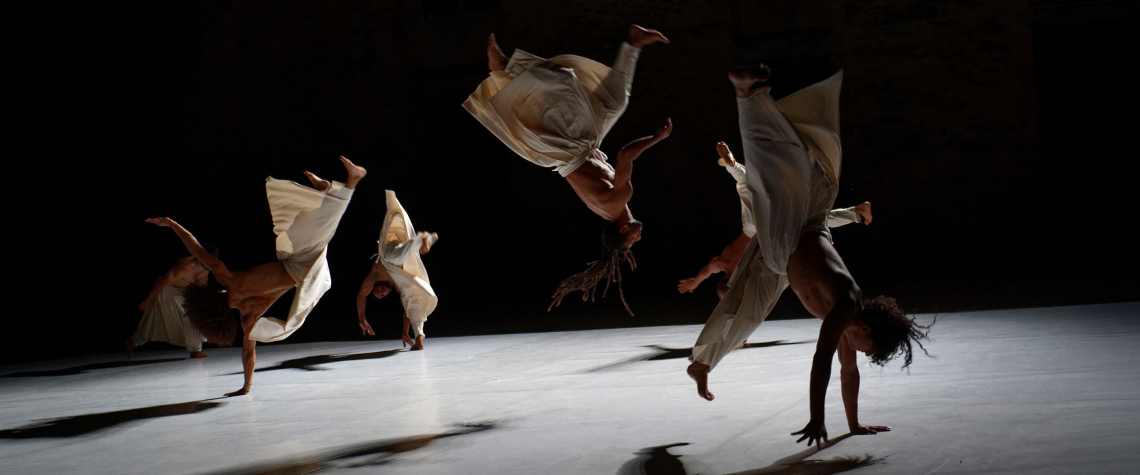
After 2019 and 2021, Hervé Koubi's company is once again back in Budapest. Fourteen male dancers will perform a truly personal story for audiences at the Budapest Dance Festival on 10 May. The company founder talked to us about the piece, which is a mixture of capoeira, martial arts, and street dance.

Photo: Sébastien Lozé
What the Day Owes to the Night is inspired by Yasmina Khadra's novel of the same name. How does your personal life story intertwine with the literary work?
I found a similar story to my parents' past in this book, although the performance is not based on or inspired by the literary work. For me the title in itself expressed all I wanted to say, what the day owes to the night, what brotherhood owes to hate or war, or what Orient owes to Occident, what memory owes to loss of memory.
The piece is performed exclusively by male dancers. Why did you consider the all-male cast concept important?
When I held the casting in Algeria, 250 people came, 249 boys and one girl. Because I wanted to work with Algerian dancers, this determined the casting from the beginning, though having male dances was not a conscious decision. The all-male team quickly became a symbol of brotherhood. I've called my dancers my found brothers before, and I find that What the Day Owes to the Night is also interwoven with the idea of brotherhood.
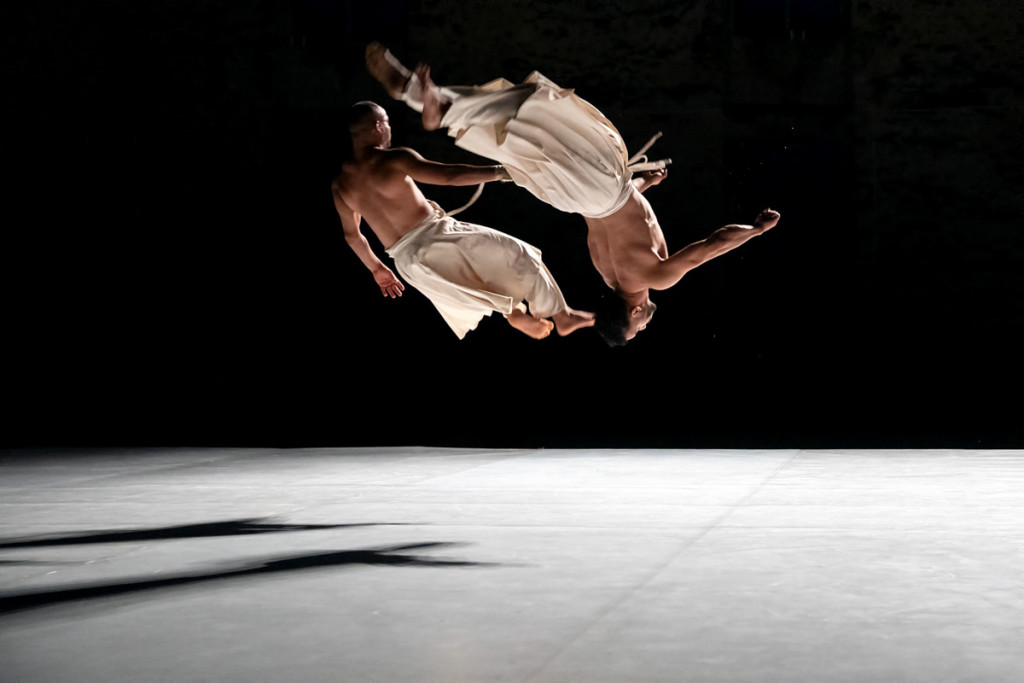
Photo:Didier Philispart
Among the sources of inspiration for the work you mentioned Orientalist painting and the stone lace of Islamic architecture.
For me, lace is important because I consider each dancer to be maybe like a thread. And a single thread is nothing without another thread. In the same way, the thread of life is intertwined with other paths of life. That is the thought that I incorporated into the choreography: the dancers sometimes dance together and sometimes separately, and then one pairs up with another, and then they exchange roles, creating new connections. It is as though to create motifs on stage, the threads create a network on stage.
If we look back at the history of lace, we can see that the original goal was to cut out the fabric, to create holes, and to reveal the material. As I sought to shed light on the darkness of my story, lace became a symbol of an important process: it creates openings and lets light in, and it reveals what lies beneath - that which is hidden deep within our history.
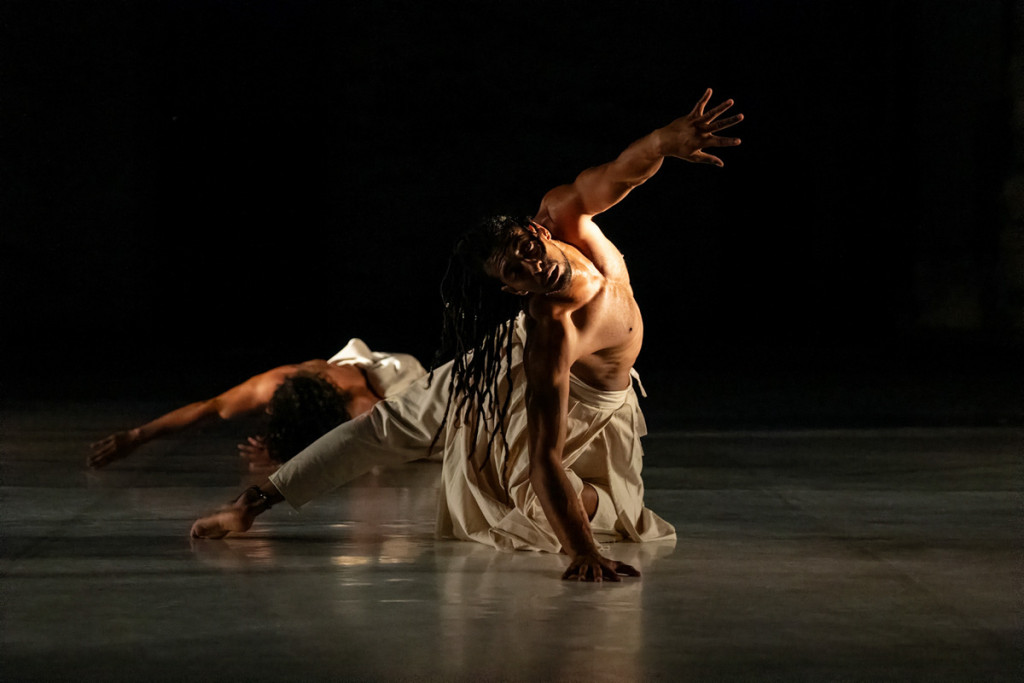
Photo:Didier Philispart
This is not the first time the company has performed in Budapest: they have previously staged the productions Barbarian Nights, or the First Mornings of the World and Odyssey. What can the Hungarian audience expect this time?
The performance What the Day Owes to the Night was my first collaboration with Algerian dancers, followed later by Barbarian Nights and then Odyssey. I would like the Hungarian audience to join me right at the start of my journey so they can see where I began - and perhaps they will watch my other plays again later on.
In this piece, I combined my choreographic work with urban dance techniques, all with a 21st-century ballet in mind. If we look back at the history of classical ballet, we can see that in the 18th century many steps were adopted from other cultural traditions. Examples include the pas de bourrée, pas de valse, mazurka, and saut de basque - all of which have their roots in the cultures of their respective eras.
I really want to develop a ballet of the twenty-first century, ballet that would be respectful of its past but also open to new techniques, such as popular genres like break dancing, capoeira, parkour, or acrobatics - all these, that are really the way of expression of our youth. The Hungarian public can now witness the beginning of this.
TD.